Broad match: why your ads show up for searches nobody asked for
You chose the keyword. Google chose the searches. Here's why that matters for a small budget.
You picked the keyword "kitchen fitter". Sensible.
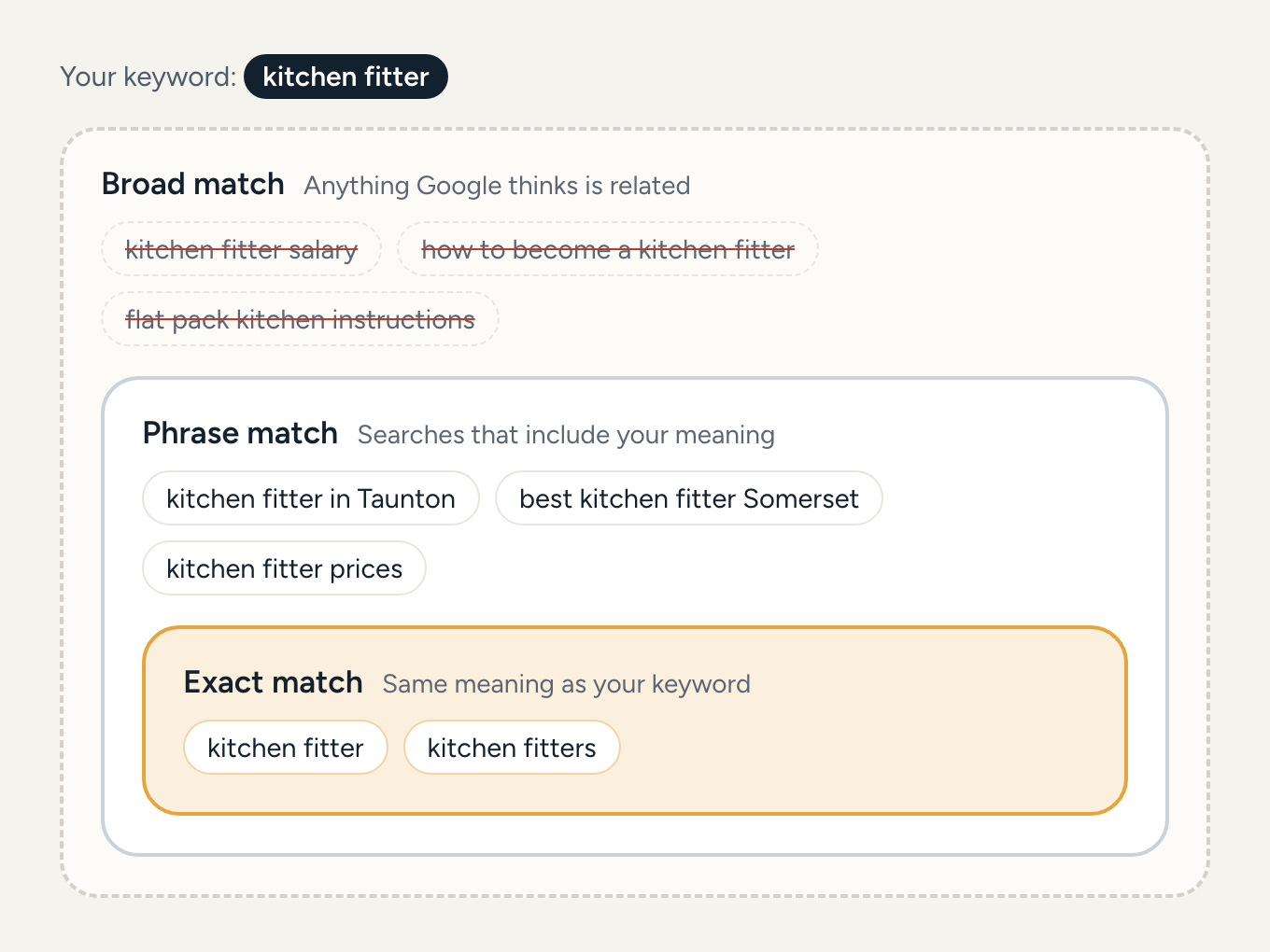
Then you open the search terms report and find you've paid for clicks on "kitchen fitter salary", "how to become a kitchen fitter" and "flat pack kitchen instructions".
Welcome to broad match.
What broad match actually does
When you add a keyword on broad match, you're not telling Google "show my ad for this". You're telling Google "show my ad for anything you think is related to this".
Google gets to decide what "related" means. Sometimes it's spot on. Sometimes it's a stretch. And on a small budget, the stretches add up fast.
The other match types
- Phrase match shows your ad for searches that include the meaning of your keyword. More control, still some flexibility.
- Exact match shows your ad for searches with the same meaning as your keyword. The most control.
Even phrase and exact are looser than they used to be. But they're a lot tighter than broad.
Why Google likes broad match
Broad match means more searches, which means more clicks, which means more spend. Google will tell you broad match works best with its automated bidding, and it can, in big accounts with lots of conversion data.
Most local businesses don't have that. They have a modest budget and a few enquiries a week. That isn't enough data for the automation to learn quickly, so it learns on your money.
What I do instead
For most local and service businesses, I start tight: phrase and exact match, a good negative keyword list from day one, and a regular look at the search terms. Once the account is getting proper results, and there's real data behind it, it's worth testing something broader.
Check yours today
Open the search terms report for the last 30 days. Read it. Every search that was never going to buy is money you can stop spending.
It's not exciting work. It's one of the most valuable things you can do in a Google Ads account.