Why you shouldn't send Google Ads clicks to your homepage
Your homepage is trying to talk to everyone. The person who just clicked your ad wants to hear about one thing.
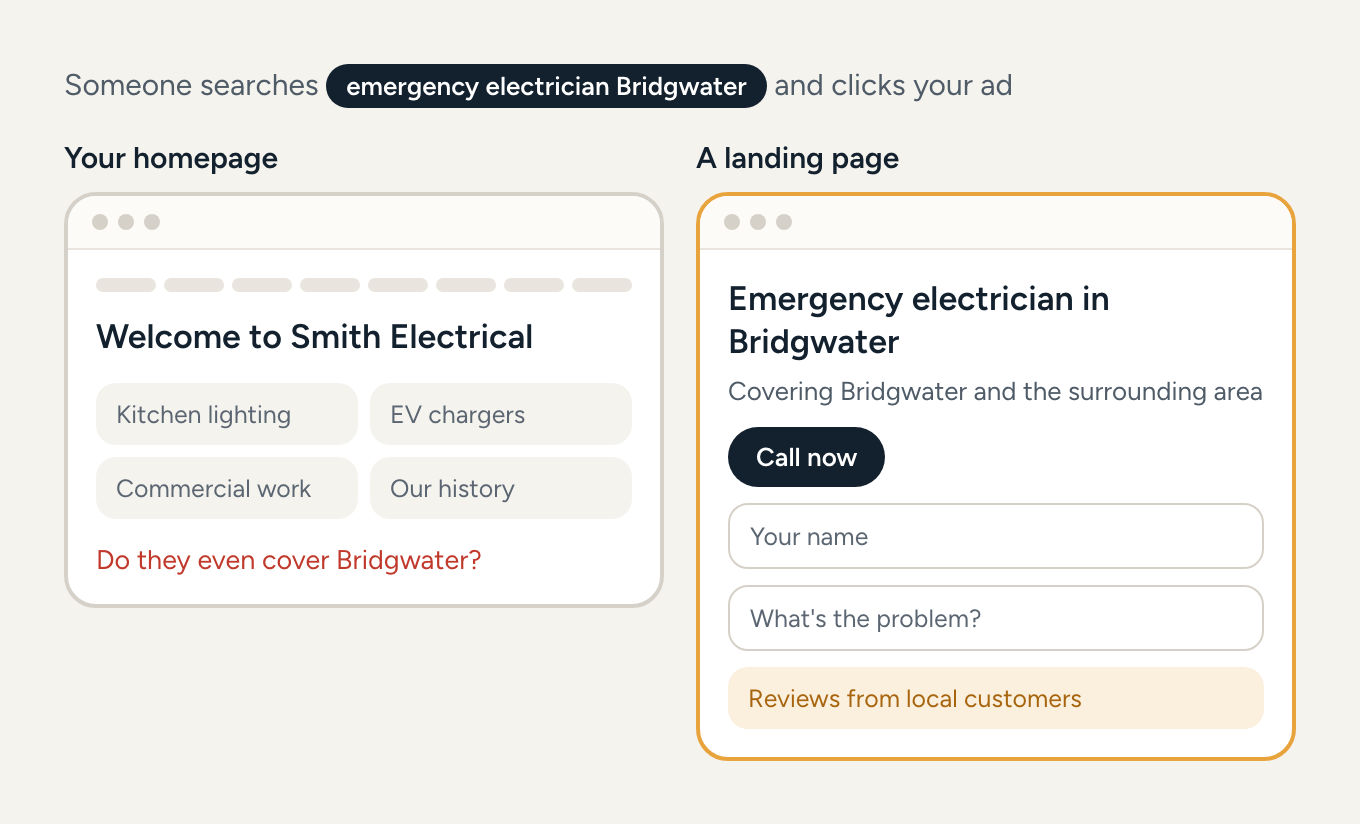
Someone searches "emergency electrician Bridgwater". They click your ad. They land on your homepage.
It says "Welcome to Smith Electrical". There's a photo of a van, a bit about your history, a menu with eight options and a slider showing kitchen lighting, EV chargers and commercial work.
Where's the emergency electrician? Where's the phone number? Do you even cover Bridgwater?
They hit back. You've paid for that click.
Your homepage has a different job
Your homepage is trying to talk to everyone: new customers, old customers, people checking you out after a recommendation, people looking for a job. It has to cover everything you do.
The person who clicked your ad wants to hear about one thing: the thing they searched for. They want to know, in a few seconds, that they're in the right place.
What a good landing page does
A landing page is built for one search and one job. It should:
- Match the search. If they searched "emergency electrician", the headline says emergency electrician.
- Say where you work. Local businesses forget this all the time.
- Make getting in touch easy. Phone number at the top, a short form, no hunting.
- Give a reason to trust you. Reviews, accreditations, how long you've been going.
- Leave out everything else. Every extra menu option is another way to leave.
Do you need loads of them?
No. Start with one for your most important service. If you sell very different things to very different people, you might need a few. But one good page beats ten average ones.
Why I work on landing pages
Landing pages come after tracking and the campaigns in the order I work, but they're never optional. You can have the best campaign in the world, and if the page lets people down, the numbers won't add up.
You've paid for the click. The landing page decides whether it was worth it.